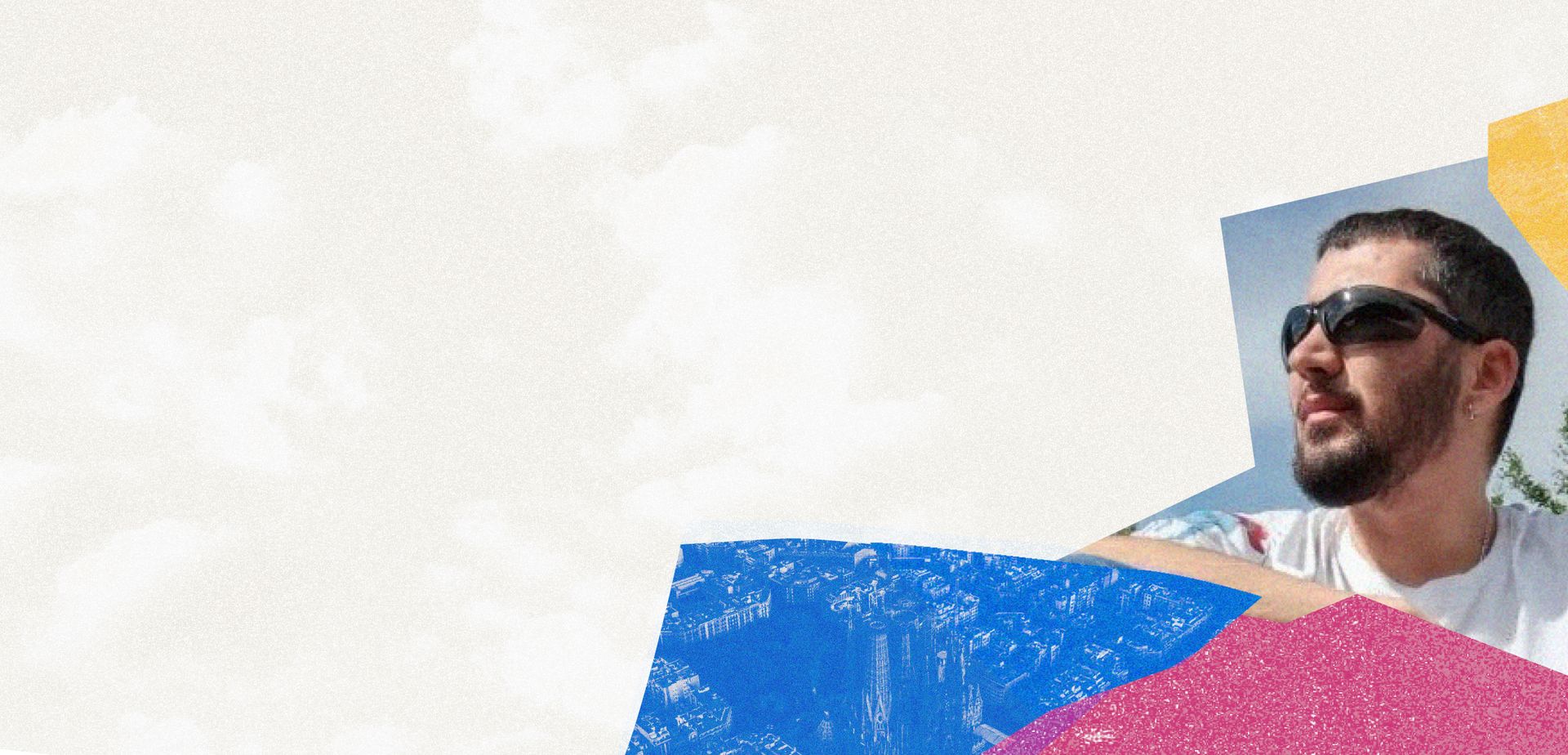
When Elnar landed in Spain in the early hours of an autumn morning, he perched himself on a gate bench, still as a rock for two hours, trying to take it all in.
His exhaustion was twofold: first, from working twenty-five days straight ahead of his second attempt to fly to safety, and second, from the more than 30 years it took him to find a home where he could live authentically.
“If I hadn't been born into this situation, I probably never would have immigrated,” the 36-year-old transgender man says. “It's very difficult to move somewhere from scratch.”
The UNHCR estimates that there will be more than 136 million forcibly displaced people in 2026 due to war, conflict, violence, human rights violations, or persecution. For LGBTQI+ refugees like Elnar, these experiences often intersect in ways that make finding safety even more difficult. Before his resettlement in Spain, Türkiye — with its linguistic and cultural similarities to his country of origin — was as far as his own means could take him. But a new beginning in a new country alone did not make his life safer or easier.
The Long Road to Safety
Elnar longed for legal and social recognition as his authentic self. Self-administered hormone therapy had caused discrepancies between his appearance and the gender marker on his documents, which he could not change in Türkiye. “It just became clear that with my passport, I wouldn't be able to get into any European country, not America, not Canada, where they'd just let me live in peace,” he says. “Either I'd have to go across the sea somehow, or I'd go through Mexico.” Meanwhile, as more and more refugees moved to the country due to the war in Ukraine, authorities enacted stricter barriers to obtaining visas and residence permits, ultimately leading to his being given 90 days to leave Türkiye.
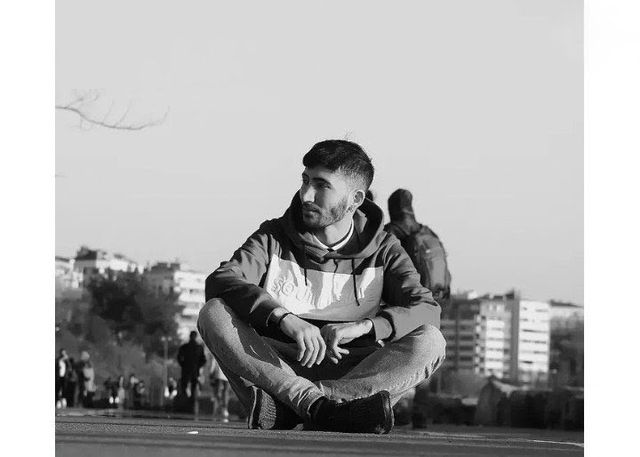
“I couldn't go home. I remember staying at a friend's dacha [a seasonal home outside the city]. I think that now, even the dacha would be occupied. I'm wondering what I would do, how I would do it, [if it happened now],” he says. He returned to Türkiye once more, determined to find a safer place.
That’s when Elnar reached out to Rainbow Railroad. Through our Emergency Travel Support (ETS) program, he received support to pursue a pathway to safety.
Over the past 20 years, more than 2,200 people have been supported through ETS. Nearly three in 10 people assisted through the program last year had similarly been displaced and living outside of their country of nationality when they contacted us for assistance.
When the Path to Safety Isn’t Guaranteed
Still, even when a pathway to safety exists, reaching it is never guaranteed. Racial profiling, transphobia, and other barriers may often bar asylum seekers from boarding a flight in the first place. For Elnar, the former proved true. He was stopped from boarding his first flight to Spain after a quick passport check. Police shortly thereafter escorted him off the airport premises.
His eventual arrival in Spain offered a stark contrast to that experience. When Elnar recalls the moment, he speaks with a sort of melancholy: Around 2am, amidst the quiet hums of a nearly empty airport, he stood from the bench. He grabbed his phone, wrote a message, translated it, and showed an immigration officer a note that explained he wanted to claim asylum. The officer responded kindly, almost nonchalantly, to what Elnar had explained. “To speak freely about being trans is very difficult,” he says. “At that point, I didn't yet realize that I was in Spain, and no matter who you are, you’re a normal person.”
What Safety Makes Possible
The days that followed were, and continue to be, arduous. But as he tells Rainbow Railroad about his asylum application approval, new life in Spain, and ability to access the care he needs, it’s clear that the journey was worth it. “Today, I am simply happy. For some people, having documents that reflect who they are, being able to see a doctor, work legally, or simply walk outside without fear, may seem like ordinary things. For me, they became an enormous gift and the beginning of a completely new life,” he says. “I am infinitely and deeply grateful to Rainbow Railroad for helping me reach a safe place and giving me the opportunity to see life from a completely different perspective — to see that life can actually be beautiful, that there can be a brighter side to it, and that I can have a future too.”
Elnar knows that a future can begin with a pathway to safety.
For 20 years, our global community has helped create those pathways for LGBTQI+ people facing persecution. Today, requests for help are reaching record levels, while critical funding is becoming increasingly uncertain.
Help build what comes next — stronger pathways to safety, stronger communities, and a future where LGBTQI+ people can live and love authentically.
For 20 years, our community has shown up. Let’s keep showing up. Donate today.